

JWT Debugger & Security Inspector
Decode, verify, and security-audit JSON Web Tokens (JWT) in real time. 100% client-side privacy with zero server logging.
JWT Debugger & Security Inspector: the tool
Tested in-browser using Web Crypto API. Secret keys never leave your device.
{
  "alg": "HS256",
  "typ": "JWT"
}{
"sub": "usr_0a1b2c3d",
"name": "Alex Vance",
"email": "alex@example.com",
"role": "engineer",
"iat": 1761830400,
"exp": 1793394400,
"iss": "https://auth.deesu.org"
}Automated JWT Security & Vulnerability Audit
Ensure your secret key has at least 256 bits of entropy and your verification logic explicitly prevents algorithm confusion attacks against RS256 public keys.
Expired 101h 43m ago (10/30/2026, 9:06:40 PM). Server will reject this token.
Payload contains standard claims without obvious credentials or high-risk field names.
Need enterprise authentication, OAuth 2.0, or security hardening?
DEESU audits and architects zero-trust identity pipelines, token revocation state machines, and API security firewalls across mobile and web platforms.
How it works
How JSON Web Tokens (JWT) Work in Modern Web and Mobile Architecture
JSON Web Tokens (RFC 7519) are a compact, URL-safe standard for cryptographically transmitting claims between an identity provider (such as Auth0, Firebase, Supabase, or a custom OAuth 2.0 backend) and client applications. A standard JWT comprises three base64url-encoded parts separated by periods: Header, Payload, and Signature.
The Header specifies the cryptographic signing algorithm (such as HMAC SHA-256 or RSA PKCS#1 v1.5) and token type. The Payload contains identity claims such as the subject (sub), issuance timestamp (iat), and expiration timestamp (exp). The Signature is generated by hashing the header and payload with a secret or private key, allowing the receiving API to verify authenticity without querying a database.
Critical Security Flaws Found in Production JWT Implementations
Because JWTs are self-contained and widely supported, developer oversights can lead to severe privilege escalation and authentication bypasses:
- The 'alg: none' Vulnerability (CVE-2015-9235): When JWT verification libraries accept tokens with alg: 'none', attackers strip the signature and forge arbitrary administrative claims.
- Key Confusion / Algorithm Switching (HS256 vs RS256): If an API expects an RS256 token (signed with an asymmetric private key and verified with a public key) but accepts HS256, an attacker can sign a token using the server's publicly accessible RSA public key as the HMAC symmetric secret.
- Missing Expiration (exp) and Long-Lived Sessions: Tokens issued without an exp claim never expire. If leaked via client-side XSS or proxy logs, attackers retain permanent account access.
- Sensitive Data Leaks: Storing passwords, credit cards, or internal API keys in the payload. Remember: base64url encoding is NOT encryption; anyone with access to the token can read the payload.
Best Practices for Token Lifecycle and Replay Prevention
Production microservices should never rely on raw JWTs for long-term session storage. Best practice pairs short-lived access tokens (5 to 15 minutes) with rotating refresh tokens stored in secure, HttpOnly, SameSite=Strict cookies or native OS keychain storage (EncryptedSharedPreferences on Android and Keychain on iOS).
For financial and high-security endpoints, verify the JWT ID (jti) claim against a high-speed Redis revocation list to immediately neutralize compromised sessions upon logout or password reset.
Questions, answered
Related reading and help
 Web Development
The 2026 JWT Security Flaws Guide: Algorithm Confusion, Token Expiry & Replay Protection
Inside modern JWT vulnerabilities: how Algorithm Confusion (HS256 vs RS256) works, the alg:none flaw, and production zero-trust verification in TypeScript.
Nov 3, 20267 min read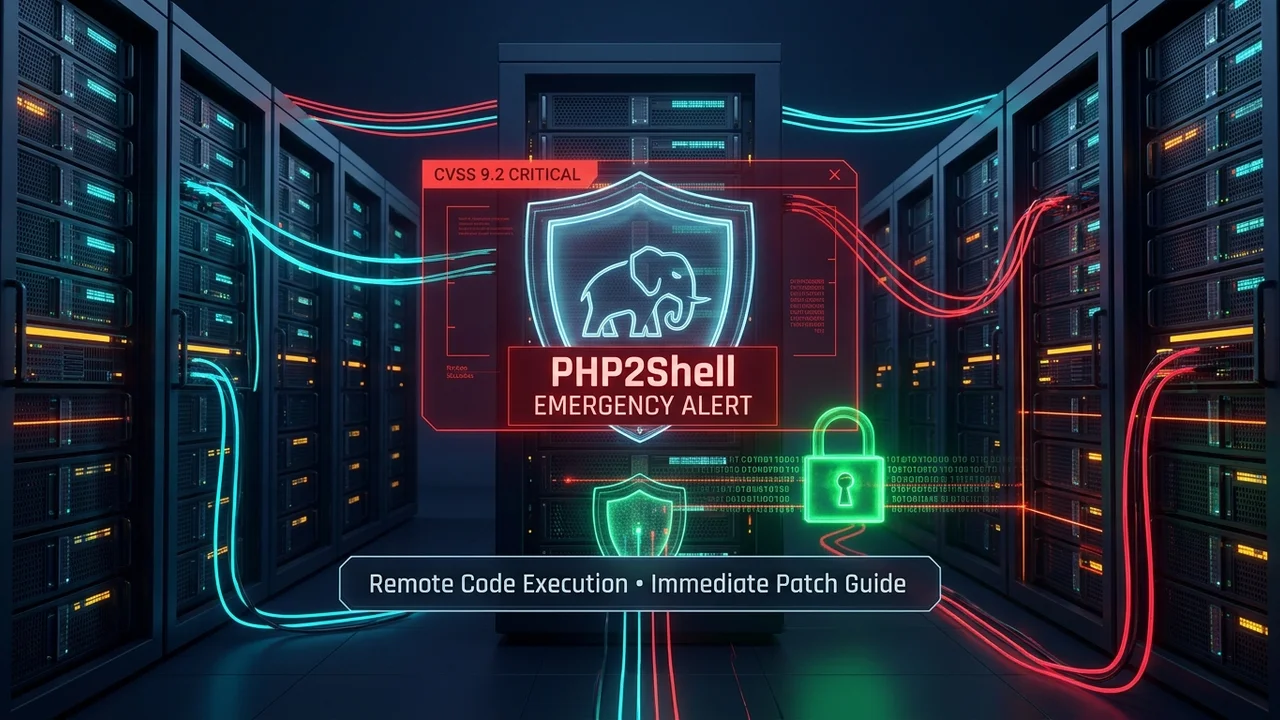 Cloud & DevOps
PHP2Shell Alert (CVE-2026-109618 & CVE-2026-109619): The 9.2 CVSS Remote Code Execution Flaw in PHP (Emergency Patch Guide)
Emergency guide for PHP2Shell (CVE-2026-109618 & 19). Learn how Zend memory corruption causes 9.2 CVSS RCE, why plugins fail, and how to patch.
Oct 23, 20269 min read- Technical Writing
Writing API Docs Developers Actually Open Instead of Routing Around
Thorough documentation and useful documentation aren't the same thing. Here's what makes developers trust your docs instead of giving up and filing a ticket.
Aug 14, 20256 min read - DEESU serviceWeb DevelopmentWeb applications built to be found and built to convert — SEO-minded from the first commit, from storefronts to internal portals.See the service
More free tools
- Open Graph & social meta tag generatorGenerate and test Open Graph, Twitter Card, and SEO meta tags with live previews for Google, X, LinkedIn, and Facebook.
- Google Play & App Store fee calculatorCalculate your exact take-home payout, compare standard 15% vs 30% cuts, and test if external billing saves money.
- App cost calculatorEstimate a price range for an Android app or website from its features, in your local currency.
- Google Play launch checklistAn interactive checklist covering the store listing, policies, quality checks and release steps.
- Project brief generatorAnswer a few questions and get a clear, copyable brief you can send to any development team.
- App privacy policy generatorAnswer a few questions and get a plain-English privacy policy and a delete-account page for your Android or iOS app.
- App icon generatorUpload one image and download every Android, iOS and favicon size, with adaptive icon safe-zone checks.
- Play Store listing optimizerCheck your title, short and full description against keyword, readability and Google Play policy rules.
- LLM token & cost calculatorForecast production AI API expenses across OpenAI, Anthropic & DeepSeek. Model prompt caching savings and routing arbitrage.
- Cron expression generator & explainerBuild, validate and translate crontab schedules for Linux, AWS EventBridge, GitHub Actions and Kubernetes.
- JSON to TypeScript & Zod converterInstantly convert raw API JSON payloads into clean TypeScript interfaces and production Zod v3 validation schemas.
- Docker Run to Docker Compose converterConvert raw docker run commands into production Docker Compose v2 YAML with automated security hardening and healthchecks.
Tell us what you're building.
Send the problem, not a polished brief. We'll tell you what it actually takes to ship it: stack, timeline and cost, before you commit to anything.