

Open Graph & Social Meta Tag Generator
Generate, audit, and preview Open Graph and Twitter Card tags in real time. Avoid broken link previews on social platforms and export production-ready metadata for HTML, Next.js, and Astro.
Open Graph & Social Meta Tag Generator: the tool
1. Core Metadata Details
Enter your page's live URL, headline, and summary.
2. Advanced Platform Settings
SEO & Open Graph Audit
Automated validation against social scraper requirements.
Live Social Card Previews
DEESU
https://deesu.org
DEESU — Engineering That Outlasts the Launch
Production software built and operated by senior engineers. Android apps, high-speed web platforms, and cloud infrastructure.
Export Code
<!-- Primary Meta Tags -->
<title>DEESU — Engineering That Outlasts the Launch</title>
<meta name="title" content="DEESU — Engineering That Outlasts the Launch">
<meta name="description" content="Production software built and operated by senior engineers. Android apps, high-speed web platforms, and cloud infrastructure.">
<meta name="robots" content="index, follow">
<meta name="theme-color" content="#0f6b4c">
<link rel="canonical" href="https://deesu.org">

<!-- Open Graph / Facebook / LinkedIn -->
<meta property="og:type" content="website">
<meta property="og:url" content="https://deesu.org">
<meta property="og:title" content="DEESU — Engineering That Outlasts the Launch">
<meta property="og:description" content="Production software built and operated by senior engineers. Android apps, high-speed web platforms, and cloud infrastructure.">
<meta property="og:image" content="https://deesu.org/og-image.png">
<meta property="og:image:width" content="1200">
<meta property="og:image:height" content="630">
<meta property="og:site_name" content="DEESU">
<meta property="article:author" content="Hamza Fazal">

<!-- X / Twitter -->
<meta name="twitter:card" content="summary_large_image">
<meta name="twitter:url" content="https://deesu.org">
<meta name="twitter:title" content="DEESU — Engineering That Outlasts the Launch">
<meta name="twitter:description" content="Production software built and operated by senior engineers. Android apps, high-speed web platforms, and cloud infrastructure.">
<meta name="twitter:image" content="https://deesu.org/og-image.png">
<meta name="twitter:creator" content="@deesu_org">
<meta name="twitter:site" content="@deesu_org">How it works
The Open Graph Protocol in 2026: Why Link Previews Decide Your Organic CTR
When someone shares your URL on LinkedIn, X (Twitter), Slack, iMessage, or WhatsApp, the platform's automated web crawler requests your HTML, parses the <head> tags, and renders a visual 'unfurled' card. If your Open Graph (OG) tags are missing or improperly configured, the platform falls back to a plain text link or a generic thumbnail — slashing your click-through rate by up to 70%.
While the Open Graph protocol was originally created by Facebook in 2010, it has evolved into the universal metadata standard across the entire web ecosystem. In 2026, modern platforms expect high-resolution 1200×630 pixel images, absolute HTTPS asset URLs, Twitter Card directives (twitter:card), and structured canonical URLs to prevent duplicate content indexing.
The 1200×630 Aspect Ratio Rule and Retina Pixel Density
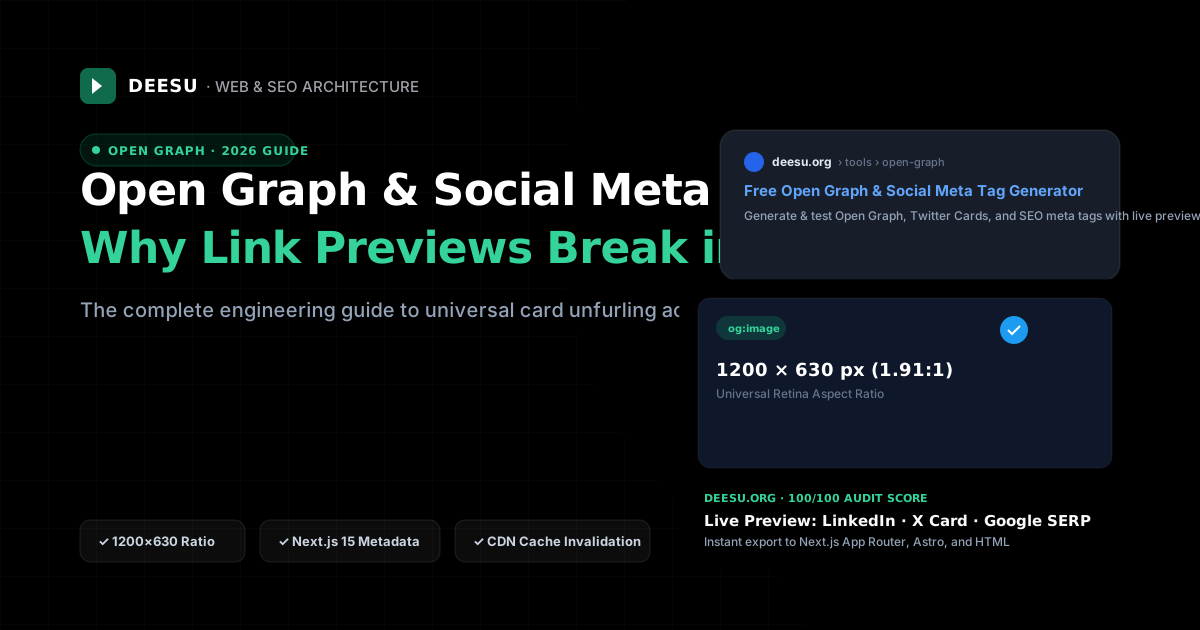
All major social platforms (Facebook, LinkedIn, X, Discord, and Slack) have standardized on a 1.91:1 aspect ratio. The recommended resolution is 1200 × 630 pixels.
Keeping your Open Graph image at 1200×630 guarantees crisp rendering on high-DPI retina mobile screens while avoiding automatic cropping. If you supply a square image (e.g. 500×500) without specifying twitter:card: summary, platforms will stretch or center-crop the graphic, cutting off logos and headlines.
- Always use absolute URLs (e.g.
https://example.com/og.png), never relative paths (/og.png). - Keep total image file size under 5 MB (WhatsApp and Twitter reject files larger than 5 MB).
- Host OG images on a reliable CDN with fast TLS handshake, since scrapers time out after 2 to 3 seconds.
- Add
og:image:width(1200) andog:image:height(630) to allow Facebook to render the card immediately on the first share without waiting for the image download to finish.
The Platform Caching Nightmare: How to Force-Purge Link Previews
One of the most frustrating issues developers face is updating their Open Graph tags, only to see the old title and broken thumbnail persist on social feeds. This happens because platforms cache link previews heavily on their edge servers for weeks at a time.
To force an immediate cache refresh after deploying changes to your website, use the official platform debugging tools:
- Facebook & Messenger: Use the Facebook Sharing Debugger and click 'Scrape Again'.
- LinkedIn: Paste your URL into the LinkedIn Post Inspector to clear the preview cache.
- X (Twitter): Test in the X Card Validator or append a harmless query parameter (e.g.
?v=2) to force a fresh scrape. - Slack & Telegram: Send the link to the
@WebpageBoton Telegram, or append a query string parameter in Slack to trigger a cache invalidation.
How Modern Frameworks Handle Open Graph (Next.js, Astro, and Vite)
In modern React and Next.js (versions 14, 15, and 16 with App Router), you no longer need to write raw HTML <meta> tags manually. Instead, you export a typed metadata object or implement dynamic generateMetadata() functions.
For dynamic Open Graph generation, libraries like @vercel/og and Satori convert JSX into SVG and PNG edge images on the fly. However, the static fallback metadata must still be declared in your root or page layout to ensure search engines and bots can inspect the page synchronously without executing client-side JavaScript.
Questions, answered
Related reading and help
 Web Development
Open Graph & Social Meta Tags in 2026: The Complete Guide to Bulletproof Link Previews
Why social link previews break on LinkedIn, X, Slack, and Google, how edge dynamic OG image generation works, and how to build metadata that maximizes organic clicks.
Oct 11, 20268 min read- Web Development
React or Next.js: Choosing the Right Foundation for Your Web Product
Next.js is built on React, not a rival to it — so the real question isn't which one to pick, it's whether you need what Next.js adds on top.
Sep 27, 20256 min read - Technical Writing
Writing API Docs Developers Actually Open Instead of Routing Around
Thorough documentation and useful documentation aren't the same thing. Here's what makes developers trust your docs instead of giving up and filing a ticket.
Aug 14, 20256 min read - DEESU serviceWeb DevelopmentWeb applications built to be found and built to convert — SEO-minded from the first commit, from storefronts to internal portals.See the service
More free tools
- Google Play & App Store fee calculatorCalculate your exact take-home payout, compare standard 15% vs 30% cuts, and test if external billing saves money.
- App cost calculatorEstimate a price range for an Android app or website from its features, in your local currency.
- Google Play launch checklistAn interactive checklist covering the store listing, policies, quality checks and release steps.
- Project brief generatorAnswer a few questions and get a clear, copyable brief you can send to any development team.
- App privacy policy generatorAnswer a few questions and get a plain-English privacy policy and a delete-account page for your Android or iOS app.
- App icon generatorUpload one image and download every Android, iOS and favicon size, with adaptive icon safe-zone checks.
- Play Store listing optimizerCheck your title, short and full description against keyword, readability and Google Play policy rules.
Tell us what you're building.
Send the problem, not a polished brief. We'll tell you what it actually takes to ship it: stack, timeline and cost, before you commit to anything.