

LLM Token & Production Cost Calculator
Forecast monthly OpenAI, Claude, DeepSeek and Gemini API expenses, simulate prompt caching savings, and model multi-tier routing arbitrage.
LLM Token & Production Cost Calculator: the tool
System prompt, RAG docs & user message
Generated response (priced 4x–10x higher)
Anthropic & DeepSeek offer a 90% discount on cached tokens. OpenAI offers a 50% discount.
Equivalent to ~$0.00319 per query.
Saves $109,710 annually through prompt caching and multi-model routing.
Production LLM Pricing & Caching Comparison (2026)
Official published API rates per 1,000,000 tokens across major AI providers.
| Model Name | Provider | Input / 1M | Cached Input / 1M | Output / 1M | Context Window | Latency / Speed |
|---|---|---|---|---|---|---|
| Claude 3.5 Sonnet | Anthropic | $3.00 | $0.300 | $15.00 | 200k | Fast (~45 t/s) |
| GPT-4o | OpenAI | $2.50 | $1.250 | $10.00 | 128k | Very Fast (~70 t/s) |
| OpenAI o1 / o3 | OpenAI | $15.00 | $7.500 | $60.00 | 200k | Deliberate (~25 t/s) |
| Claude 3.5 Haiku | Anthropic | $0.80 | $0.080 | $4.00 | 200k | Ultra Fast (~100 t/s) |
| GPT-4o-mini | OpenAI | $0.15 | $0.075 | $0.60 | 128k | Ultra Fast (~110 t/s) |
| DeepSeek-V3 | DeepSeek | $0.14 | $0.014 | $0.28 | 64k | Very Fast (~65 t/s) |
| Gemini 1.5 Flash-8B | Google Cloud | $0.04 | $0.010 | $0.15 | 1M | Real-time (~120 t/s) |
Scaling an AI feature or struggling with runaway cloud API bills?
DEESU designs low-latency semantic routers, self-hosted SLM pipelines, and automated prompt caching architectures that cut AI infrastructure costs by up to 75%.
How it works
The 2026 Production LLM Cost Shift: Why Tokens Alone Aren't Your True Bill
In early generative AI deployments, cost calculation was straightforward: multiply total input tokens by a static rate, add output tokens, and calculate the total. In 2026, real production AI billing is dominated by three architectural variables: prompt prefix caching, reasoning token expansion, and multi-model routing.
Modern LLM providers (Anthropic, OpenAI, DeepSeek, and Google) now charge asymmetrical pricing. Output generation tokens cost anywhere between 4x and 10x more than input tokens. Meanwhile, static prompt prefixes—such as system prompts, API definitions, few-shot examples, and documentation embeddings—can be cached at up to a 90% discount when structured correctly.
How Prompt Caching Transforms AI Unit Economics
Prompt caching allows LLM servers to store the KV-cache of identical prompt prefixes across consecutive API calls. Rather than recalculating matrix multiplications for a 5,000-token system context on every query, the provider matches the cryptographic prefix hash and bills the cached portion at a massive discount:
- Anthropic Claude 3.5 Sonnet: Drops prompt input cost from $3.00/M to $0.30/M (a 90% reduction).
- DeepSeek-V3: Drops prompt input cost from $0.14/M down to $0.014/M (a 90% reduction).
- OpenAI GPT-4o: Offers automatic prompt caching with a 50% discount ($1.25/M vs $2.50/M).
- Google Gemini: Context caching offers predictable persistent pricing for multi-hour sessions.
Multi-Model Semantic Routing: The Secret to 70%+ Cloud Savings
Sending 100% of production traffic to a flagship model like Claude 3.5 Sonnet or GPT-4o is the leading cause of runaway cloud bills. In real-world enterprise applications, between 60% and 80% of user queries are routine: classification, data extraction, brief conversational answers, or triage.
By deploying an intelligent semantic routing gateway, engineering teams send routine requests to ultra-low-cost models (like GPT-4o-mini, Claude 3.5 Haiku, or DeepSeek-V3) while reserving flagship models strictly for complex code generation, logical reasoning, and long-context synthesis.
Questions, answered
Related reading and help
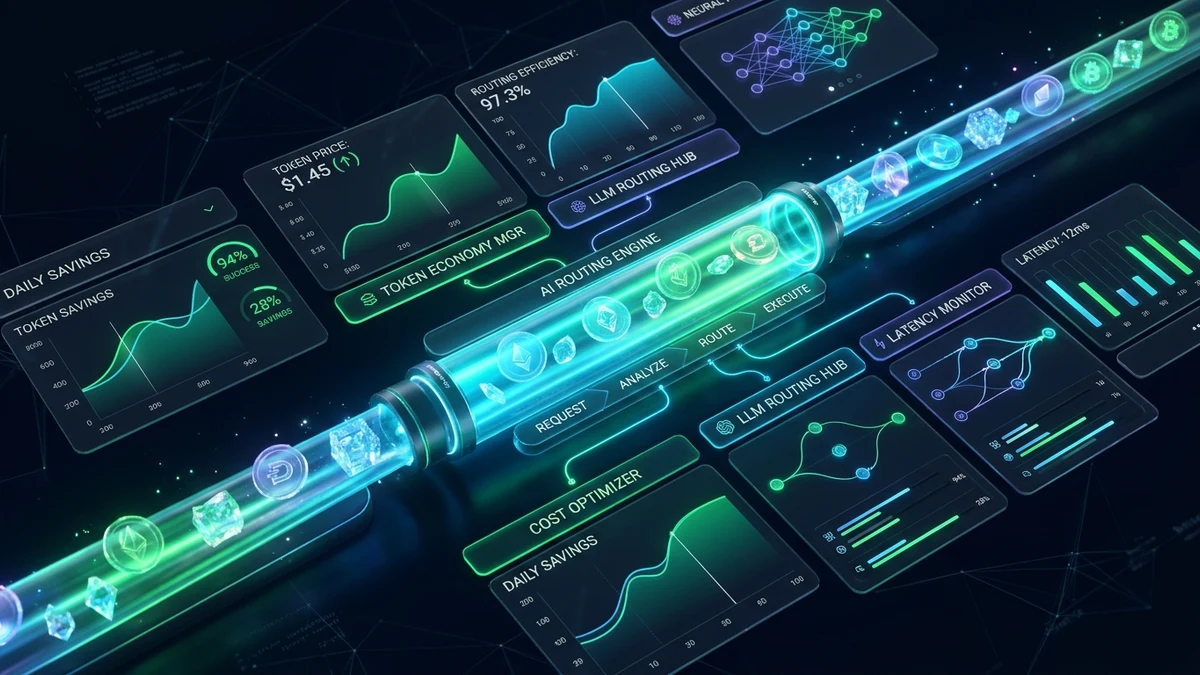 Cloud & DevOps
The 2026 LLM Pricing & Token Economics Guide: How to Forecast, Cache, and Cut Production AI Costs
Master LLM token economics in 2026. Learn prompt caching, multi-model routing arbitrage, and exact pricing math to cut production AI bills by 75%.
Oct 29, 20268 min read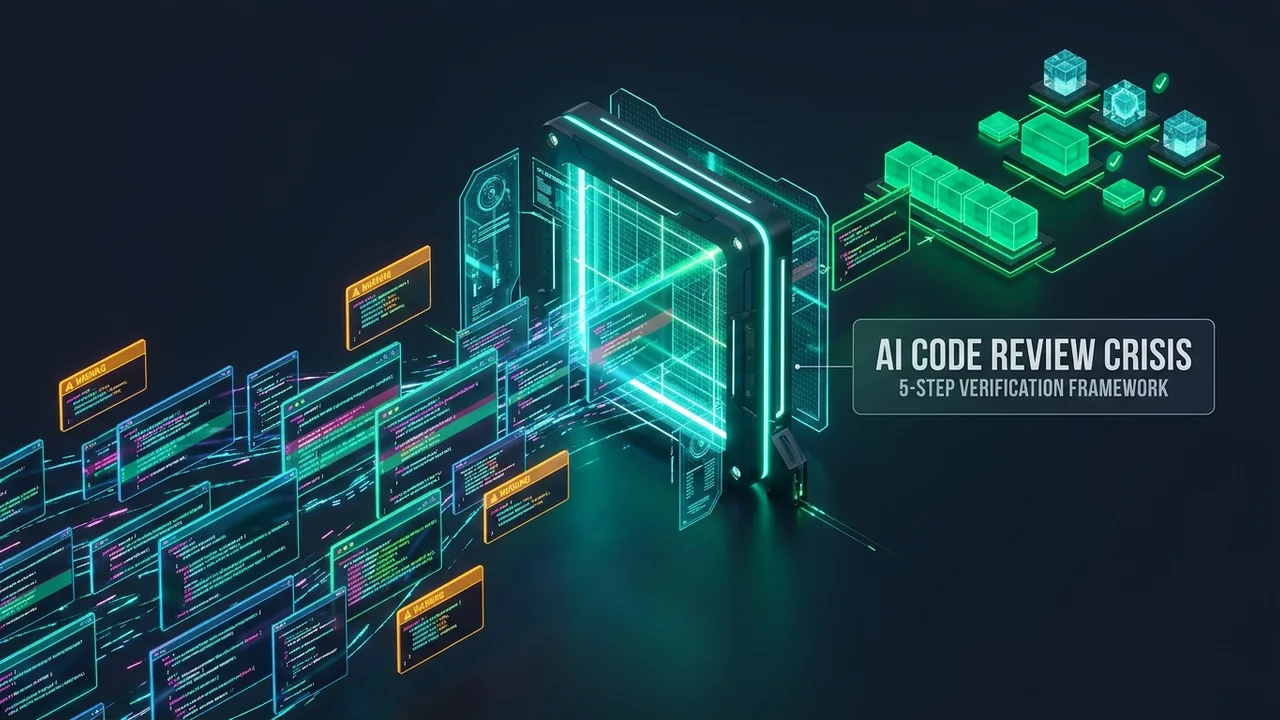 Web Development
The AI Code Review Crisis of 2026: Why Senior Engineers Are Burning Out (And The 5-Step Solution)
Why writing code with AI is 10x faster but reviewing it is 3x harder. Inside the Reverse-Engineering Tax and the 5-step framework to verify AI PRs.
Oct 23, 20269 min read- DEESU serviceCloud & DevOpsDeployment and CI/CD pipelines across AWS, Azure, and GCP — infrastructure that scales without a rewrite.See the service
More free tools
- Open Graph & social meta tag generatorGenerate and test Open Graph, Twitter Card, and SEO meta tags with live previews for Google, X, LinkedIn, and Facebook.
- Google Play & App Store fee calculatorCalculate your exact take-home payout, compare standard 15% vs 30% cuts, and test if external billing saves money.
- App cost calculatorEstimate a price range for an Android app or website from its features, in your local currency.
- Google Play launch checklistAn interactive checklist covering the store listing, policies, quality checks and release steps.
- Project brief generatorAnswer a few questions and get a clear, copyable brief you can send to any development team.
- App privacy policy generatorAnswer a few questions and get a plain-English privacy policy and a delete-account page for your Android or iOS app.
- App icon generatorUpload one image and download every Android, iOS and favicon size, with adaptive icon safe-zone checks.
- Play Store listing optimizerCheck your title, short and full description against keyword, readability and Google Play policy rules.
Tell us what you're building.
Send the problem, not a polished brief. We'll tell you what it actually takes to ship it: stack, timeline and cost, before you commit to anything.