
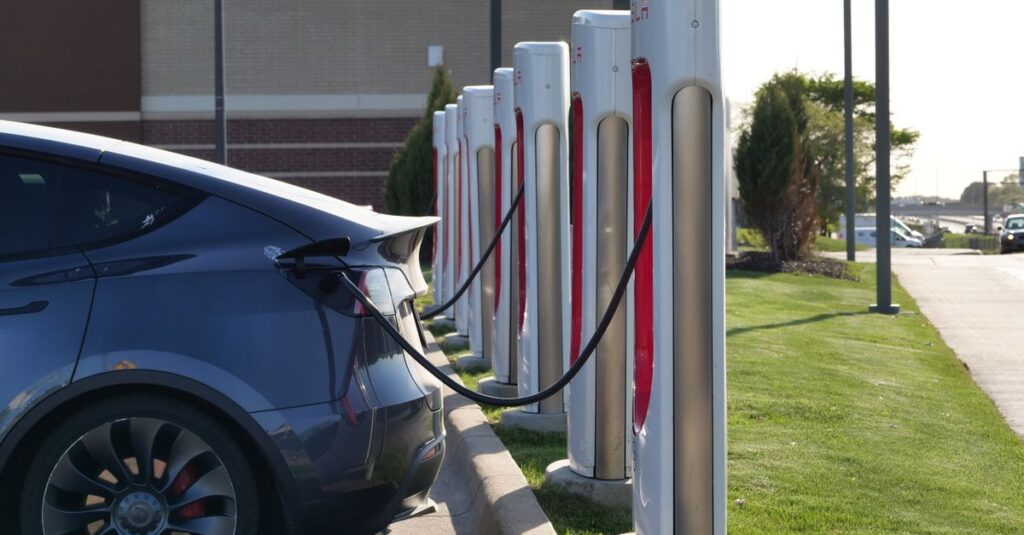
The automotive landscape has undergone a seismic shift over the past decade. With global EV sales surging past 18 million units in 2025, electric vehicles are no longer a futuristic novelty but a practical, high-performance reality for millions of drivers. However, moving from a gasoline-powered car to an EV involves understanding a completely new set of mechanics, technologies, and lifestyle adjustments. From blistering acceleration to intelligent energy management, here is a comprehensive breakdown of the core features that define modern electric vehicles.
Instant Torque and Unrivaled Acceleration
One of the most celebrated features of any EV is its ability to deliver instant maximum torque from a standstill. Unlike internal combustion engines (ICE) that require time to rev up and reach their power band, electric motors provide 100% of their available torque the moment you press the accelerator. This translates to neck-snapping, linear acceleration that makes even family sedans feel sporty. For instance, many dual-motor all-wheel-drive configurations now achieve 0-60 mph times in under 3.5 seconds, rivaling supercars of the previous generation. This responsiveness not only makes driving exhilarating but also significantly improves safety during highway merging and overtaking maneuvers.
Whisper-Quiet Cabin and Refined Handling
The absence of a roaring engine fundamentally changes the in-cabin experience. EVs are renowned for their exceptional noise, vibration, and harshness (NVH) characteristics. The drivetrain produces minimal audible noise, allowing manufacturers to focus on wind and tire noise reduction, resulting in a library-quiet interior. Furthermore, the heavy battery pack is typically mounted flat under the floorboard, creating an extremely low center of gravity. This structural design reduces body roll during cornering and provides a planted, stable feel on the road, offering handling dynamics that often surpass their gasoline counterparts. The smooth, single-speed transmission eliminates gear-shifting jolts, providing a seamless surge of power.
Soaring Range and Next-Gen Battery Chemistry
“Range anxiety” is rapidly becoming a relic of the early EV era. Modern electric vehicles boast vastly improved energy densities thanks to advancements in Lithium Iron Phosphate (LFP) and Nickel Manganese Cobalt (NMC) battery chemistries. The average range for new EVs in 2026 now sits comfortably between 250 and 400 miles on a full charge, with premium models crossing the 500-mile threshold. Innovations like cell-to-chassis (CTC) technology, which integrates the battery directly into the vehicle’s frame, are boosting both range and structural rigidity simultaneously. For drivers, this means that long-distance road trips are now entirely feasible with proper route planning.
Ultra-Fast Charging and Expanding Infrastructure
Range is only half the equation; the other half is how quickly you can replenish it. The industry’s shift toward 800-volt electrical architectures has been a game-changer for charging speeds. These systems allow for peak charging rates of over 350 kW, enabling compatible vehicles to recharge from 10% to 80% state of charge in as little as 15 to 18 minutes. Moreover, the global charging network is expanding rapidly. High-power charging corridors are now common along major highways, and urban infrastructure is improving, though home charging (Level 2) remains the most cost-effective and convenient method for daily use. The proliferation of Plug-and-Charge technology, which authenticates payment automatically, further simplifies the public charging experience.
Advanced Smart Cockpits and ADAS
Electric vehicles are essentially smartphones on wheels, offering a level of digital integration that traditional cars struggle to match. At the heart of this is the Smart Cockpit, which features over-the-air (OTA) update capabilities. These updates allow the vehicle to receive new features, improved user interfaces, and performance tweaks without visiting a dealership. Furthermore, EVs are leading the charge in Advanced Driver Assistance Systems (ADAS). Utilizing arrays of sensors, cameras, and sometimes LiDAR, these systems offer highway assist, automated lane changes, and autonomous emergency braking. The integration of AI-powered voice assistants and personalized driver profiles creates a highly intuitive user experience.
Vehicle-to-Load (V2L) Versatility
Modern EVs are transforming from mere transportation devices into mobile power stations. The Vehicle-to-Load (V2L) feature allows the car’s high-voltage battery to supply power to external devices via standard AC outlets located in the cabin or the charge port. This is revolutionary for outdoor enthusiasts, construction workers, and emergency preparedness. You can run power tools, electric grills, camping lights, or even medical devices directly from your car. In some markets, Vehicle-to-Home (V2H) technology is also emerging, allowing the EV to power a house during blackouts, effectively turning the car into a giant backup generator.
Lower Total Cost of Ownership
While the upfront purchase price of an EV can sometimes be higher, the long-term economic benefits are substantial. Electricity is inherently cheaper than gasoline on a per-mile basis—typically costing about one-third to one-quarter the price of fossil fuels. Additionally, EVs have significantly fewer moving parts. There is no need for oil changes, timing belts, spark plugs, or exhaust system repairs. Regenerative braking also extends the life of brake pads significantly. According to recent energy reports, the maintenance and fuel savings over a five-year ownership period can amount to thousands of dollars, making the total cost of ownership highly competitive.
Continuous Innovation and Thermal Management
The pace of innovation in the EV sector is staggering. Thermal management systems have evolved to use heat pumps, which are vastly more efficient than resistive heaters in cold climates, dramatically reducing winter range loss (now often kept under 15%). Meanwhile, manufacturers are aggressively working on solid-state batteries, which promise even higher energy density and faster charging times in the near future. These continuous improvements ensure that an EV bought today will be even more capable tomorrow, thanks to the perpetual refinement of software and battery management systems.
🔗 Essential Online Resources for EV Enthusiasts
- International Energy Agency (IEA) – Global EV Outlook – The definitive annual report on global EV stock, sales, and policy developments, offering hard data on market trends. Visit the IEA report here
- InsideEVs – One of the most trusted digital publications dedicated exclusively to the EV world, featuring breaking news, detailed reviews, and spy shots of upcoming models. Explore InsideEVs
- CleanTechnica – A leading clean technology news website that provides deep dives into EV battery tech, charging infrastructure, and renewable energy integration. Read CleanTechnica
- EVANNEX – An aftermarket and news blog that curates the best Tesla and general EV content, offering practical tips, accessories, and owner experiences. Check out EVANNEX
- PlugShare – The most comprehensive community-driven map for finding EV charging stations globally, complete with user reviews, photos, and real-time availability. Find chargers on PlugShare
- MIT Technology Review – Energy Section – Offers scientifically rigorous articles on the latest breakthroughs in battery chemistry, solid-state research, and grid integration. Read MIT Tech Review